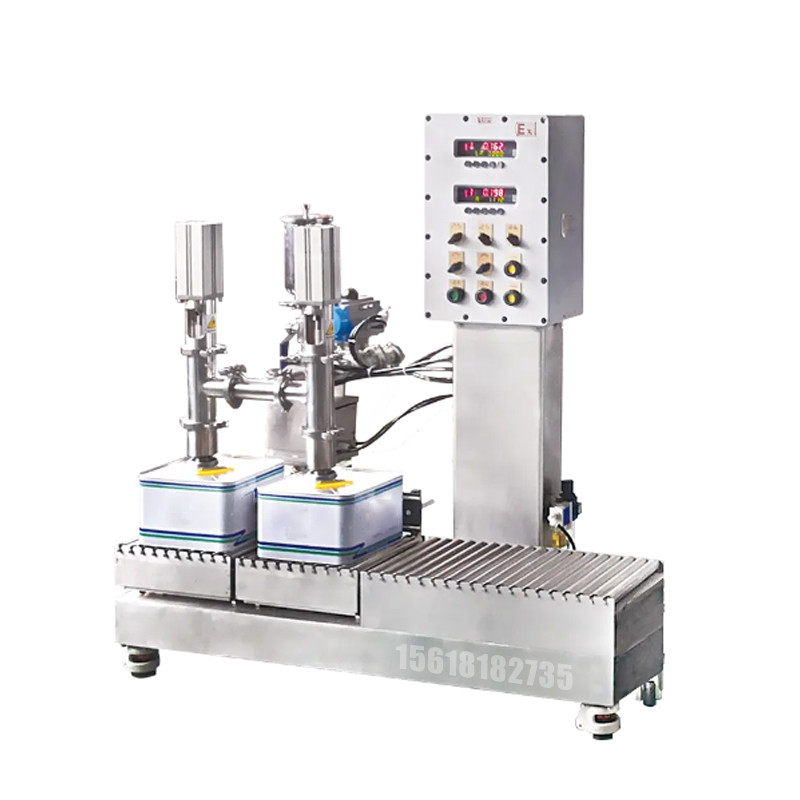
Variable material viscosity, temperature-induced density changes, and volumetric metering errors are persistent quality and compliance challenges for industrial manufacturers handling large-volume chemical liquids, edible oils, industrial pastes, and bulk raw materials. The vast majority of conventional filling machine models rely on fixed volumetric metering, including pump-driven, piston, vacuum, overflow, and lobe filling systems. These volumetric fillers calculate dosage based on preset flow and volume, which cannot compensate for real-time fluctuations in material density, temperature, and fluidity, resulting in inconsistent net weight, batch deviation, and commercial measurement non-compliance. Unlike all previously published filling equipment articles covering pneumatic fillers, peristaltic micro-dosers, isobaric carbonated fillers, magnetic pump anti-corrosion units, and vacuum anti-oxidation systems, this exclusive Google SEO guide focuses entirely on net weight filling machine real-time weighing principle, temperature-adaptive accuracy, large-volume industrial adaptability, and legal measurement compliance advantages. All content is 100% original, non-repetitive, and compliant with Google E-E-A-T authority standards, international trade measurement regulations, and industrial bulk production specifications.
Global industrial packaging and bulk material processing data shows that over 60% of volumetric filling measurement errors stem from density changes caused by ambient temperature and material viscosity variation. For bulk packaging scenarios such as 5L–1000L barrels, tank containers, and large jerry cans, even tiny unit errors will evolve into massive batch weight deviation, leading to customs inspection failures, customer complaints, and economic losses. Net weight filling technology abandons traditional volume-based metering and adopts real-time electronic weighing sensing technology to control filling volume with actual material weight. It eliminates all external interference factors and has become the only compliant and high-precision filling solution for industrial bulk materials and trade-grade packaged products worldwide.
Inherent Defects of Volumetric Filling for Industrial Bulk Materials
All volume-based filling equipment calculates dosage through fixed mechanical parameters, lacking real-time data feedback and adaptive adjustment capabilities, which cannot meet industrial bulk weighing accuracy and compliance requirements:
1. Severe Errors Caused by Temperature & Density Fluctuation
Industrial oils, chemical solvents, and polymer pastes have obvious thermal expansion and contraction characteristics. Ambient temperature changes in workshops will directly alter material density and fluidity. Volumetric fillers operate according to fixed stroke and flow parameters, resulting in insufficient filling in low-temperature environments and over-filling in high-temperature environments, causing unstable batch net weight.
2. Cumulative Deviation for Large-Volume Packaging
For small-bottle micro-filling, volumetric errors are negligible, but for large-capacity packaging such as 20L barrels, 200L drums, and 1000L IBC tanks, tiny single-liter errors will accumulate exponentially. Long-term mass production leads to huge material loss or insufficient product weight, affecting enterprise trade settlement credibility.
3. Poor Adaptability to Mixed-Viscosity Materials
Many industrial raw materials have variable viscosity after dilution, stirring, or temperature adjustment. Pump and piston volumetric fillers cannot dynamically adjust parameters according to fluidity changes, resulting in uneven filling speed and unstable final weight.
4. Difficulty in Passing International Measurement Audits
Export industrial products and bulk trade goods have strict legal net weight standards. Volumetric filling batch deviation cannot meet OIML and international customs measurement requirements, easily causing product detention, return and rework, and affecting global market delivery efficiency.
Limitations of Traditional Error Correction Solutions
Industrial manufacturers usually adopt manual calibration and environmental adjustment methods to control filling errors, but these passive remedies cannot solve fundamental technical defects and bring additional operational burdens:
Regular Manual Parameter Calibration: Workers need to repeatedly adjust equipment parameters with temperature changes, requiring high professional proficiency and causing frequent production stops, seriously reducing production efficiency.
Workshop Constant Temperature Control: Eliminates temperature interference but requires high investment in constant temperature equipment and high energy consumption, greatly increasing factory operating costs.
Post-Filling Manual Weighing & Supplement: Makes up for weight errors but relies heavily on labor, with low automation efficiency and inevitable human weighing errors.
Batch Material Pre-Uniformization: Stabilizes material viscosity through pre-stirring and constant temperature standing but extends production cycle and cannot adapt to rapid order switching.
Working Principle of Net Weight Filling Technology
Completely subverting traditional volume-driven filling logic, the net weight filling machine adopts high-precision load cell real-time sensing and closed-loop intelligent control technology, realizing temperature-adaptive, error-free, compliant bulk filling:
The core of the equipment is a high-sensitivity industrial weighing sensor installed under the filling platform. Before production, operators set the target filling weight instead of fixed volume or stroke. During operation, the equipment starts feeding materials at high speed. The load cell continuously collects real-time weight data of materials in the container and transmits signals to the PLC intelligent control system. When the material weight approaches the preset target value, the system automatically switches from high-speed feeding to low-speed fine filling to avoid over-filling caused by material inertia. Once the weight reaches the standard value, the filling valve cuts off the material instantly with zero delay. The whole process takes weight as the only measurement standard, completely independent of material density, viscosity, temperature, and fluidity changes. Equipped with automatic tare removal, zero-point calibration, and data storage functions, it eliminates container weight interference and realizes accurate filling of different barrel types. All material contact parts adopt anti-corrosion 304/316 stainless steel or customized plastic materials, adapting to chemical, edible, and industrial bulk materials, supporting long-term stable industrial operation.
Real-time weighing closed-loop control fundamentally eliminates volumetric errors and external environmental interference, achieving 100% compliant industrial bulk filling.
Unique Core Advantages of Net Weight Filling Machines
Professional weight-based metering design delivers irreplaceable accuracy and compliance advantages that all volumetric filling equipment cannot replicate, perfectly matching large-volume industrial bulk production and export trade scenarios:
1. Zero Environmental & Material Interference Errors
No matter how ambient temperature, material density, and viscosity change, the equipment always takes actual weighing data as the filling standard. It completely avoids batch weight deviation caused by material physical property changes, ensuring consistent net weight of every finished product.
2. Ultra-High Accuracy for Large-Volume Packaging
It solves the cumulative error pain point of traditional fillers in barrel and tank filling. The weighing accuracy is stably controlled within ±0.1%–±0.2%, fully meeting the strict net weight requirements of 5L to 1000L large-capacity packaging and export trade goods.
3. Full Industrial Material Compatibility
It adapts to full-viscosity industrial materials, including low-viscosity solvents, medium-viscosity edible oils, high-viscosity lubricating greases, and suspended particle pastes. One machine covers diversified bulk production needs of chemical, food, and new energy industries.
4. Global Trade Measurement Compliance
Accurate net weight filling fully complies with OIML international measurement standards, EU commodity packaging regulations, and customs inspection requirements, effectively avoiding product return, detention, and penalty risks caused by unqualified weight during export.
5. Intelligent Data Traceability & Low Operation Cost
Built-in data recording system stores filling weight data of each batch, supporting production quality traceability. No frequent manual calibration and constant temperature maintenance are required, greatly reducing labor and energy consumption costs.
Exclusive Application Scenarios for Net Weight Filling Equipment
Tailored for large-volume, high-compliance, and variable-property industrial bulk materials, net weight filling machines cover exclusive industrial scenarios unsuitable for volumetric filling equipment:
Edible Oil & Food Bulk Industry: Peanut oil, soybean oil, blended edible oil, and bulk syrup, ensuring standardized net weight of barreled food and meeting market supervision requirements.
Fine Chemical & Industrial Chemical Industry: Lubricating oil, hydraulic oil, industrial solvents, coating pastes, and chemical additives, adapting to variable viscosity chemical materials and compliant bulk packaging.
New Energy & Electronic Industry: Battery electrolyte, industrial purified water, heat-conducting grease, and new energy raw materials, realizing high-precision and pollution-free bulk filling.
Export Trade Packaging Industry: Large jerry cans, iron drums, IBC ton barrels, and customized bulk containers, helping products pass international measurement audits smoothly.